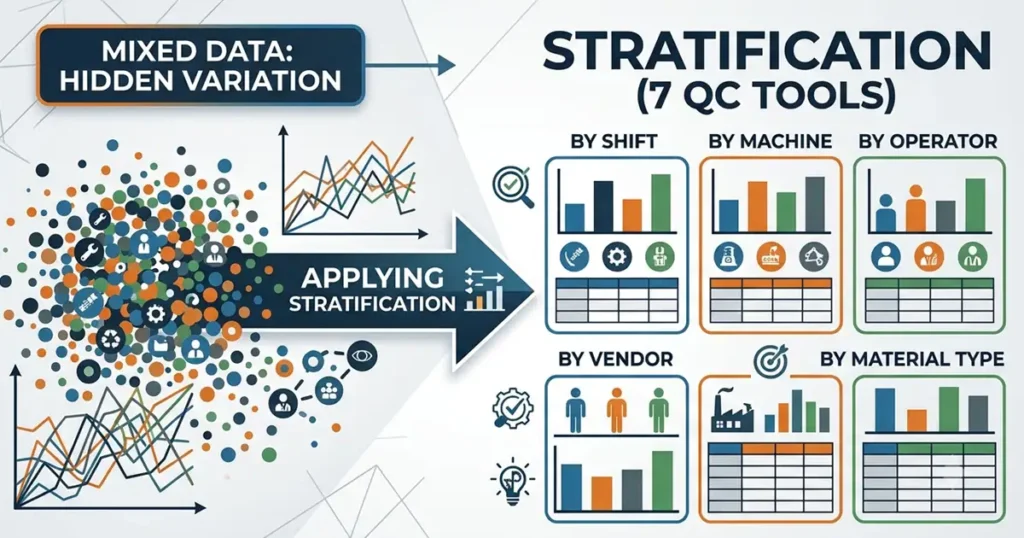
Stratification – 7 QC Tools
Stratification is one of the 7 QC tools. It is a method to divide the data into sub-categories and obtain meaningful information to solve a quality problem.
To put it simply: To identify the true problem, examine each group independently rather than combining them.
Table of Contents
ToggleDefinition of Stratification
Meaning:
- Stratification means separating/ splitting data into different groups (e.g. by time, product, machine, shift etc.)to find where a problem is happening.
Purpose:
To find hidden trends or patterns that might be unnoticed.
To enhance the accuracy of results.
Examples of Stratification:
Example: 1
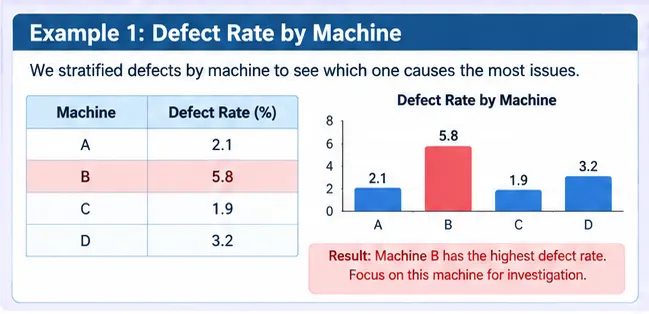
Machine wise stratification: Machine B has the most defect rate. Check its settings, tools, and maintenance.
Example: 2
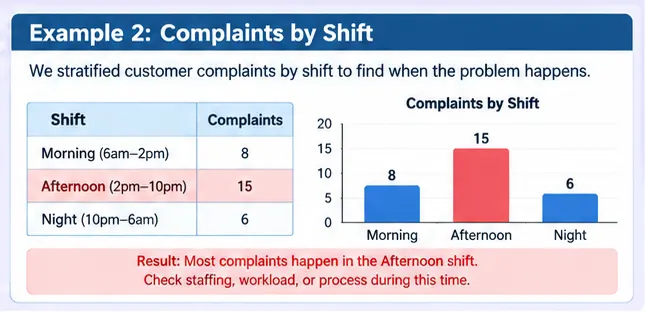
Shift wise stratification: The afternoon shift has the most defects. Check training, workload, and working conditions.
👉Remember: Stratification = Separate → Compare → Find the cause → Improve.
How to use stratification
Collect data about the problem.
Divide the data into groups, such as machine, shift, operator, or supplier.
Compare the groups.
Identify which group has the most defects.
Take corrective action.
Benefits of Stratification – 7 QC Tools
Improves overall product and process quality.
Helps identify unknown patterns and trends in data.
It helps in root cause analysis.
Works well with other QC tools, such as histograms and check sheets.
Helps reduce process variation systematically.
Identifies common causes of variation.
Directs improvement efforts toward areas that need attention.