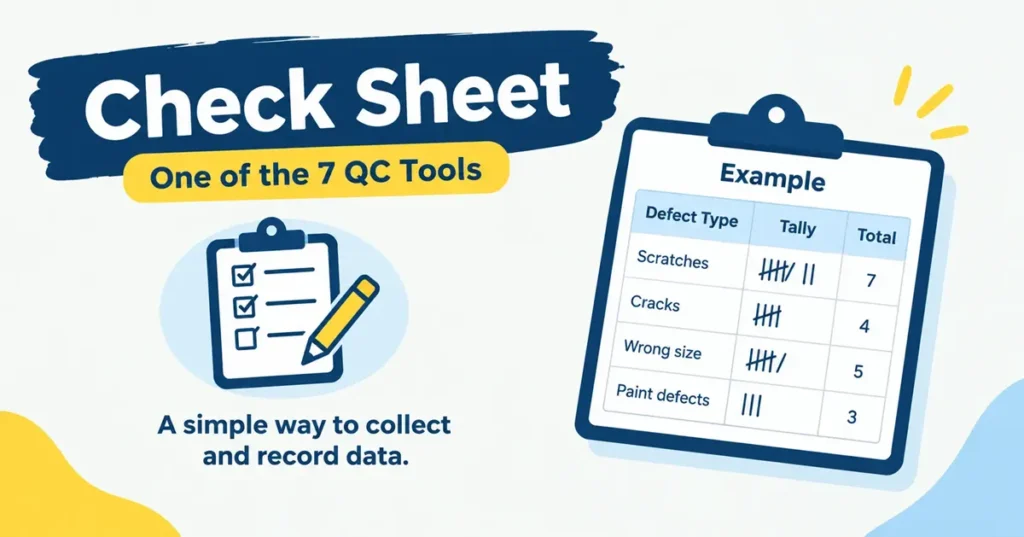
Check Sheet | Tally Sheet – 7 QC Tools
A Check Sheet – 7 QC Tools, is also known as a Tally Sheet.
It is mainly used for collecting data. This data can be in the form of observations, opinion, and numerical in real-time location where it is generated.
This is the basic and very important tool of 7 QC Tools and is used in Problem Solving Techniques such as 8D, PDCA and measure phase of Six Sigma.
Table of Contents
ToggleDefinition of Check Sheet
A check sheet is a simple, pre-designed form used to collect and record data systematically. It helps identify the frequency and pattern of problems.
When To Use Check Sheet
When the data collection required from different machines, parts, models, shifts, persons and locations etc.
When tracking the frequency of problems.
When identifying recurring issues in a process.
When monitoring quality over time.
When gathering data for analysis and improvement.
Benefits of Check Sheet
- Helps to analyse data for corrective and preventive action.
- Helps analyze patterns and trends.
- Easy and systematic data collection.
- Saves time and reduces recording errors.
- Identifies frequent defects and problems.
- Supports better decision-making and quality improvement.
Examples
Example: 1
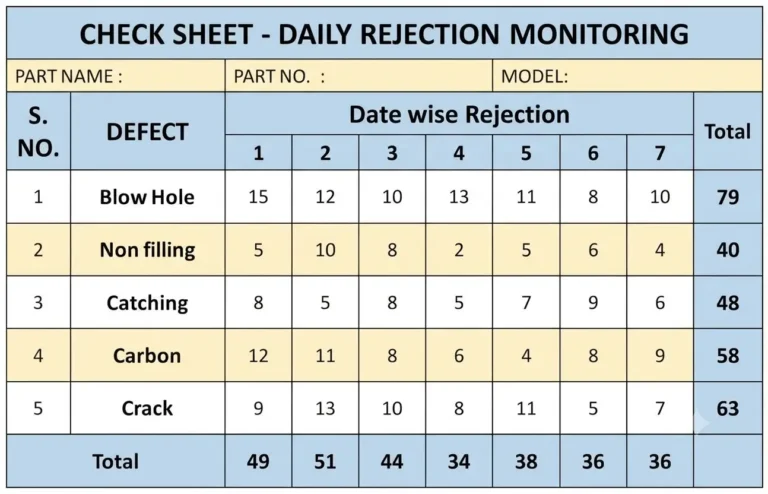
Date wise and defect wise rejection monitoring check sheet.
An example given below, shows at a glance that the major rejection contributing defects are Blow hole and crack and high rejection is on dated 1 and 2.
Example: 2
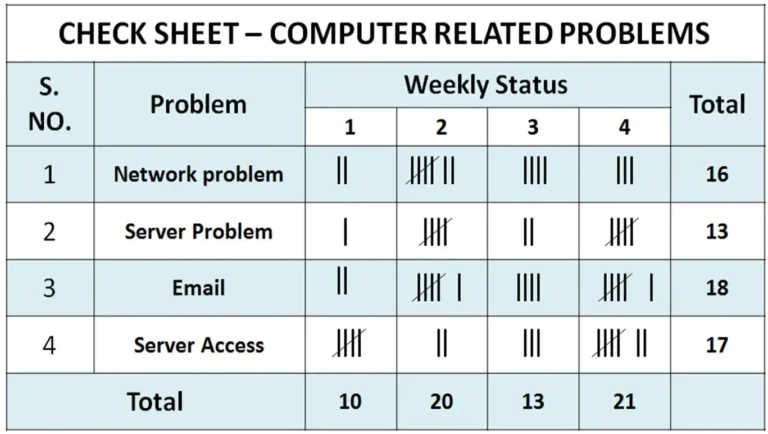
Computer related problem check sheet that shows the weekly status of problems.
An example given below, shows at a glance that the major problem are related to Email and Server Access and last fourth week having the maximum problem.
How To Use
Define the purpose – Decide what data you need to collect.
Prepare the format – List defect types or categories.
Collect data – Record each occurrence using tally marks.
Count the results – Calculate the total for each category.
Analyze the data – Identify frequent problems and take corrective action.
Check Sheet Key Elements
- Title: Purpose of data collection.
- Date & Time: When data is recorded.
- Categories: Types of defects or events.
- Tally Marks: Record each occurrence.
- Frequency Count: Total occurrences in each category.
- Remarks: Additional observations, if needed.
Types of Check Sheet
Defect Check Sheet – Records the types and frequency of defects.
Defect Location Check Sheet – Identifies where defects occur.
Frequency Check Sheet – Counts how often an event occurs.
Measurement Check Sheet – Records measured values.
Checklist Check Sheet – Verifies whether specific tasks or requirements are completed.